If you’ve spent any time on Pinterest lately, you’ve probably seen the phrase “cottagecore witch” attached to everything from amber glass jars to dried lavender bundles to moody little altar shelves. It’s not a costume and it’s not a single product — it’s a way of decorating that blends two aesthetics that turn out to fit together beautifully. Here’s what it actually means, and how to start building it in your own home.
Two Aesthetics, One Feeling
Cottagecore is the romantic, slow-living side of things — think gingham, wildflowers, handmade textiles, sunlight through a kitchen window, a life that feels unplugged and a little old-fashioned. It’s about warmth, simplicity, and things made by hand.
Witchy decor brings in the mystical layer — crystals, candlelight, apothecary bottles, dried herbs hung to cure, moon phases, altar corners. It’s less about spellbooks and more about a home that feels intentional, a little mysterious, and connected to the natural world.
Put them together and you get cottagecore witchcraft: a cottage that just so happens to have a crystal on the windowsill and a bundle of dried rosemary over the stove. It’s earthy rather than gothic, warm rather than dark, and rooted in the idea that your home can feel both cozy and a little enchanted.
Where It Actually Came From
Cottagecore isn’t as new as it feels. The name was coined on Tumblr around 2018, but the fantasy it’s built on — quiet rural life as an escape from modern noise — goes back much further, echoing the Romantic movement’s idealization of nature in the 1700s and 1800s, the handmade ethos of the Arts and Crafts movement, and the back-to-the-land homesteading wave of the 1970s. Tumblr users had been quietly gravitating toward cabins, gardens, and pastoral imagery since 2014; the hashtag just gave it a name.
Then came 2020. Locked indoors during the pandemic, people turned to cottagecore as comfort fantasy — baking bread, tending houseplants, dreaming of a slower life. Tumblr saw a 150% jump in cottagecore posts between March and May of that year alone, and the aesthetic spilled over onto Pinterest and TikTok, helped along by cultural moments like Taylor Swift’s Folklore. Around the same time, a parallel aesthetic — witchcore — was gaining its own following on TikTok, rooted in modern witchcraft, occultism, and themes of self-possession and empowerment.
The two aesthetics were always going to merge. Cottagecore wanted a simpler, more intentional domestic life; witchcore wanted that same domesticity infused with ritual and meaning. Cottagecore witchcraft is what happens when a kitchen shelf becomes both decor and practice.
The Witch Archetypes Behind the Aesthetic
Part of what makes this style so rich is that it borrows from several distinct “types” of witch within modern witchcraft culture — you don’t have to practice any of it to appreciate how each one shapes a different decorating instinct:
The kitchen witch treats cooking as the craft itself — intention folded into everyday meals, herbs and spices used with purpose, a stove that feels like the heart of the home. This is where hanging herb bundles, wooden spoons, and open spice shelving come from.
The green witch works with plants, gardens, and foraged materials — someone who knows which flowers press well and which herbs dry best. This is the instinct behind windowsill herb gardens and dried botanical arrangements.
The hedge witch is about boundaries and protection — a home that feels like a safe, warded space. This shows up as entryway bundles, threshold decor, and the general sense of a home that feels looked after.
The cottage witch is really the umbrella of all three: nature magic folded into cozy, rustic, lived-in domestic life. It’s less a single practice than a whole-home sensibility — which is exactly why “cottagecore witch” works as well as it does as a decorating aesthetic, whether or not you’re drawing on any of the practice behind it.
You don’t need to identify with any of these to use the look. But knowing where the visual language comes from is part of what separates “witchy home decor” from a Halloween costume — this aesthetic has real roots in both a design movement and a spiritual practice, even when you’re just borrowing the mood.
What Defines the Look
A few threads run through almost every cottagecore witch space:
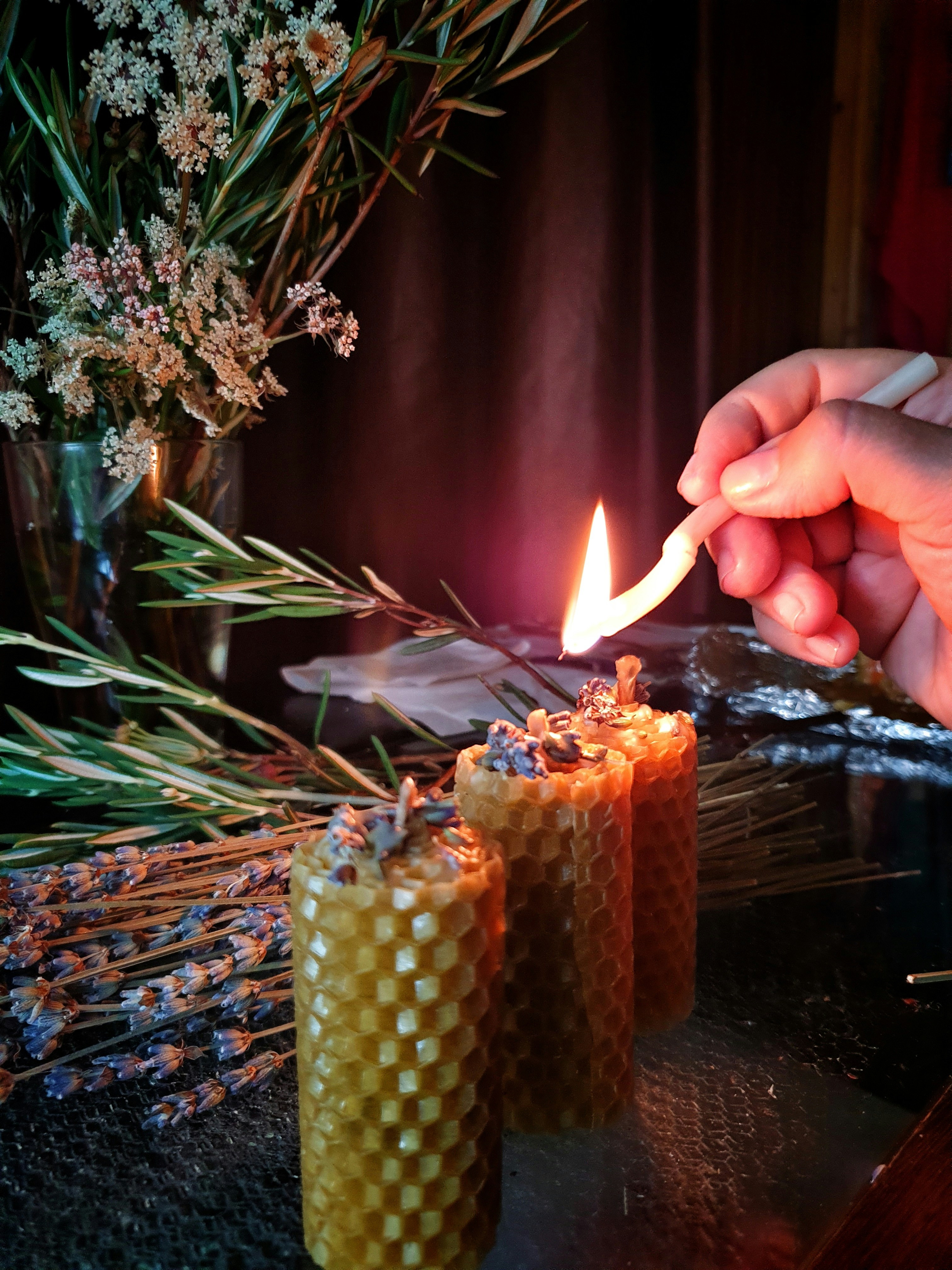
Amber and warm glass. Apothecary jars, cork-stoppered bottles, amber pillar candles — anything that filters light into a golden glow instead of a harsh white one.
Dried over fresh. Herb bundles, wheat, lavender, and botanicals that have been air-dried rather than fresh-cut. It reads as patient and a little witchy, and it lasts.
Natural materials. Wood, brass, linen, raw crystal, unglazed ceramic — textures that look gathered rather than manufactured.
A moody, muted palette. Deep browns, plum, sage, antique gold. Nothing neon, nothing stark white. The goal is candlelight, even in daylight.
A dedicated small corner. Most people don’t redecorate a whole room — they build one shelf, windowsill, or side table into a little altar-like vignette: a candle, a crystal, something dried, something with a story.
Where to Start
You don’t need to overhaul your home to bring this in. A good entry point is picking one category and building from there:
- Apothecary jars & bottles for kitchen counters and open shelving
- Crystal & altar displays for a windowsill or dresser top
- Dried herbs & botanicals for hanging bundles or table centerpieces
- Candles & home fragrance for the warm-light layer that ties a room together
Most people find that starting with one small corner — a shelf, a windowsill, a console table — teaches them what they actually gravitate toward before they commit to anything bigger.
This is the anchor post for everything we cover here — check back as we build out guides for each corner of the aesthetic, or follow along on Pinterest for daily inspiration.