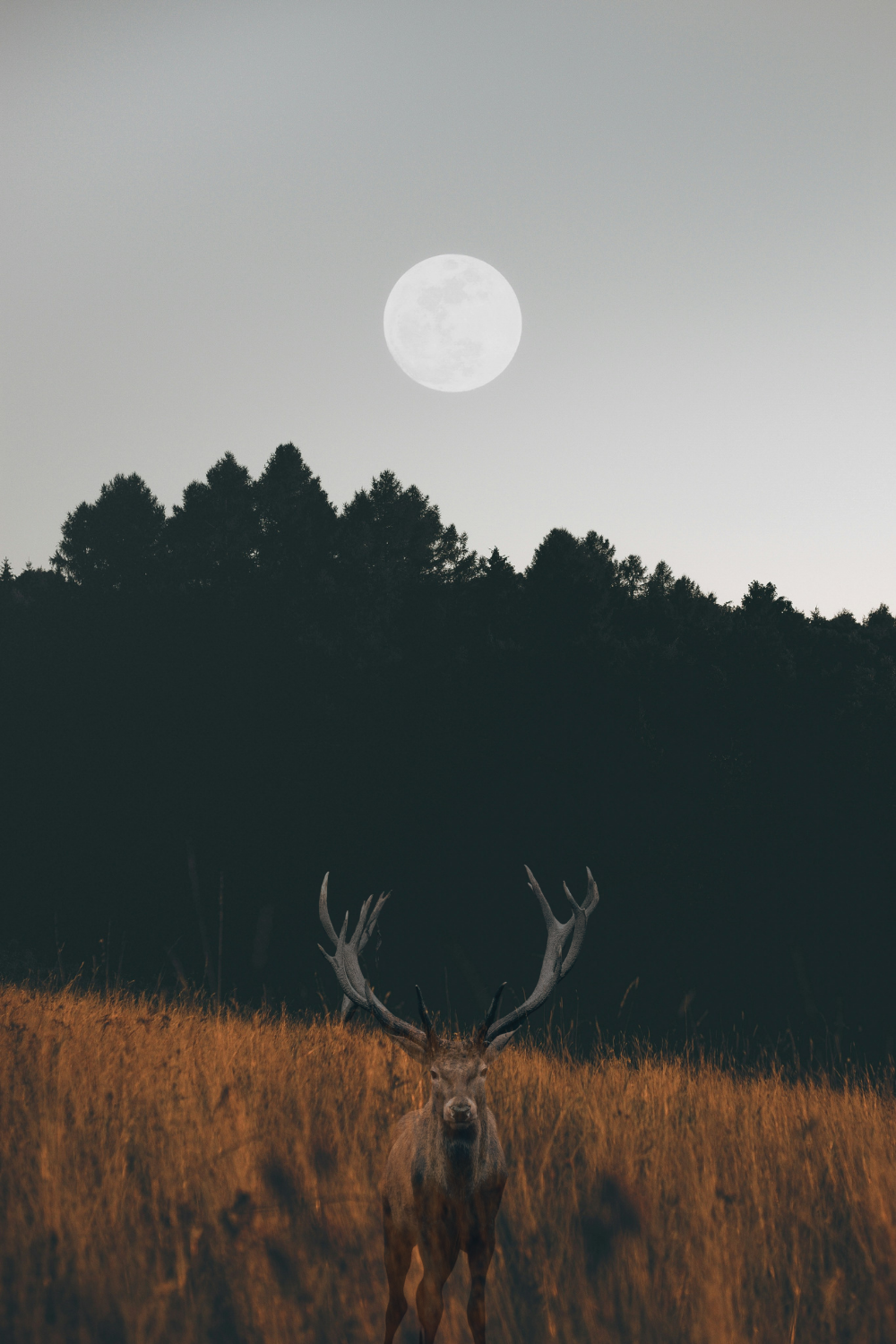
July’s full moon — the Buck Moon — rises on July 29 this year, and if you’ve been feeling a little restless or a little reflective lately, you’re not imagining it. Full moons have a way of asking us to pause in the middle of a busy season, and the Buck Moon, landing right in the thick of summer, is no exception.
Here’s what it means, where the name comes from, and a few unfussy ways to mark it at home.
Why It’s Called the Buck Moon
The name comes from deer, not witchcraft. In early July, male deer (bucks) begin growing their new antlers for the year — a process that happens on a fairly predictable annual cycle, which is exactly the kind of natural marker that gave early full moon names their staying power. The Farmers’ Almanac and various Indigenous and colonial-era naming traditions in North America recorded this pattern, and “Buck Moon” stuck.
According to the Old Farmer’s Almanac and Farmers’ Almanac, you’ll also see this moon called the Thunder Moon (for July’s frequent storms), the Hay Moon (after the July hay harvest), the Mead Moon, or the Salmon Moon (timed to salmon runs), depending on the tradition and region. All of them point to the same idea: this is a full moon that’s deeply tied to the rhythms of high summer — growth, heat, and abundance right before things start to shift toward harvest season.
What the Buck Moon Represents
In modern witchy and moon-ritual practice, the Buck Moon is generally associated with:
- Strength and growth — like antlers, things that have been quietly developing all season are ready to be noticed
- Protection — deer symbolism often carries themes of gentleness paired with resilience
- Momentum — this is the first full moon of true summer, a natural checkpoint for how the year’s goals are progressing
- Release — as with any full moon, it’s a traditional time to let go of what’s no longer serving you before the next lunar cycle begins
You don’t need to take any of this literally to find it useful. A full moon is, at minimum, a built-in monthly reminder to actually stop and look up.
Simple Ways to Mark the Buck Moon at Home
Watch the moonrise. Look toward the southeast shortly after sunset on July 29 — the Buck Moon climbs into the sky not long after dark. No equipment needed, just a clear view and a few minutes.
Make moon water. Fill a glass jar with water and leave it somewhere it’ll catch moonlight overnight — a windowsill or porch works fine. Traditionally used in small rituals or simply to water plants the next morning, it’s a low-effort way to feel connected to the cycle without any real prep. (Here’s how to make moon water, step by step.)
Do a mid-summer check-in. The Buck Moon falls almost exactly at the midpoint between the solstice and the fall equinox, which makes it a natural moment to ask: what’s grown since June? What’s still taking shape? A few honest lines in a journal do more here than any elaborate ritual.
Light a candle and let something go. Full moons are traditionally associated with release rather than intention-setting (that’s more of a new moon thing). Write down one thing you’re ready to let go of, and safely burn the paper, or simply sit with the thought until the candle burns low.
Bring the outside in. A small dish of water reflecting candlelight, a sprig of something from the garden, dried herbs on the windowsill — small, quiet gestures that echo the moon’s presence without needing anything new.
A Five-Minute Buck Moon Ritual
If you want a little more structure without much effort:
- Step outside (or sit by a window) after the moon has risen.
- Take a few slow breaths and actually look at it.
- Name one thing that’s grown or strengthened for you this summer.
- Name one thing you’re ready to release before the next full moon.
- Sit with both for a minute, then go back to your evening.
That’s the whole ritual. The Buck Moon doesn’t require candles, crystals, or a particular tradition — just a pause in the middle of a busy season.
Why Bother Marking a Full Moon At All
You don’t have to be pagan, witchy, or spiritual to get something out of this. Full moons happen roughly every 29.5 days, which makes them one of the most reliable natural rhythms available — a built-in, no-app-required reminder to check in with yourself. The Buck Moon, specifically, lands at a moment when summer is in full swing but starting to tip toward its second half, which makes it a genuinely good, low-pressure checkpoint for the season.
Step outside on July 29, look up, and see what it stirs.
Want more seasonal, cottagecore-witch inspiration? Follow along on Pinterest for daily moodboards, full moon rituals, moon magic, and cozy witchy home ideas as the Wheel of the Year turns toward fall.
Sources: